
The WETT Inspection Conversation I've Had Three Times This Month
What Kelowna buyers, sellers, and homeowners should know about wood-burning appliances — and why the rules here in the Okanagan are stricter than most people realize.

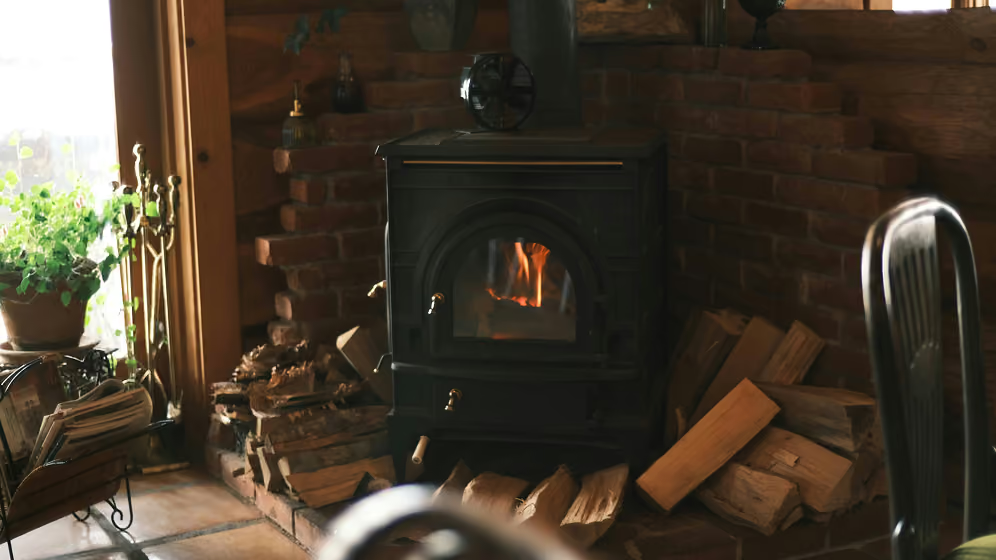
In the last couple of weeks, I've had the same conversation with a seller and two different buyers. Every single time, it started the same way: "We just need a WETT certificate, right?"
And every single time, I've had to gently explain that "WETT certificate" isn't quite a thing — and that here in the Okanagan, the safety inspection is only one piece of the puzzle.
If you own a home in Kelowna (or anywhere in the Central Okanagan) with a wood stove, fireplace insert, or any other solid-fuel-burning appliance, this post is for you. I've been learning a lot about this lately, and I want to share what I've found, because it really does affect how home sales unfold around here.
First, What Does "WETT" Actually Mean?
WETT stands for Wood Energy Technology Transfer. It's a Canadian non-profit organization focused on the safe installation, inspection, and maintenance of wood-burning systems.
Here's the misconception I run into all the time: people think a homeowner gets a "WETT certificate." That's not how it works. WETT certifies the inspector, not the appliance or the home. After your inspection, what you actually receive is a written report that outlines:
- Whether the installation appears compliant
- Any deficiencies the inspector noted
- Recommendations for repairs or upgrades
- Areas that could not be inspected
It is not a pass/fail document. It's a snapshot of what the inspector observed on that day.
Why WETT Inspections Matter So Much in Real Estate
Here in the Okanagan, where wood stoves are common — especially in rural and recreational properties — WETT inspections come up constantly. There are three big reasons:
1. Home Insurance. Many insurers in BC will not write or renew a policy on a home with a wood-burning appliance unless they've seen a recent WETT report. Some require only a basic inspection. Others want more depending on the age of the unit.
2. Real Estate Transactions. Buyers want reassurance that the appliance was installed properly, that clearances to combustibles are safe, and that the chimney and venting are sound. The buyer's insurance company often requests the report before binding coverage.
3. Fire Safety. A poorly installed or aging wood stove can cause chimney fires, carbon monoxide exposure, heat transfer to framing, and venting problems. A proper inspection catches these issues before they become disasters.
The Three Levels of WETT Inspections
This is the part that surprised me most when I started digging into this. There isn't just one type of WETT inspection — there are three, and they're designed for different situations.
Level 1: Visual Inspection
This is the most common type, and it's what most homeowners get for an insurance renewal or a routine real estate transaction.
The inspector visually examines accessible components: the appliance, visible venting, clearances to combustibles, doors, dampers, clean-outs, and the chimney from ground level. Nothing is dismantled and no walls are opened.
For many homes, this is all that's needed.
Level 2: Technical Inspection
A Level 2 goes considerably deeper. It's often recommended when:
- A home is being bought or sold
- A chimney fire has occurred
- The appliance has been modified
- The stove has sat unused for a long time
- A Level 1 inspection raised concerns
It includes everything in Level 1, plus removing accessible panels, inspecting flue pipes and clean-outs, getting into attics or crawlspaces, and often roof access. Specialized tools and ladders come into play. This is the level that tends to give buyers (and their insurance providers) more confidence.
Level 3: Invasive Inspection
This one is rare. A Level 3 inspection is only performed when there's reason to suspect hidden hazards — concealed damage, suspected chimney fire, structural concerns, water damage, or evidence of unsafe clearances hidden behind finished walls.
It can involve opening drywall, disassembling portions of a chimney, or removing building materials. It may even require permits. Most homeowners will never need one, but it's worth knowing it exists.
Here's Where the Okanagan Gets Its Own Rulebook
This is the part I want every buyer and seller in Kelowna to understand: a WETT report only tells you whether the appliance is physically installed safely. It does not tell you whether the appliance is legally allowed to operate under our local bylaws.
Those are two different questions, and in the Okanagan, the second one matters a lot.
The Smoke Control Bylaw (RDCO Bylaw No. 773)
The Regional District of Central Okanagan — which covers Kelowna, West Kelowna, Lake Country, and Peachland — enforces a unified Smoke Control Bylaw with some strict rules:
- New installations must meet ultra-low emission standards. Any indoor wood-burning appliance being installed today must hold either an EPA 2020 certification or a CAN/CSA B415.1 certification. Older, uncertified stoves cannot be newly installed.
- Wood quality is regulated. It's a nuisance violation to burn anything other than clean, untreated wood with a moisture content of 20% or less. Wet wood, garbage, painted lumber — these can result in fines.
- Outdoor wood boilers are heavily restricted. They're banned outright in standard residential zones and require a 40-metre setback from property lines even in permitted rural zones.
This is why a stove can pass a WETT safety inspection and still create problems during a sale. If it's an older, uncertified unit, the buyer's insurance company may simply refuse to cover it, and depending on the situation, replacement may be the only realistic path forward.
Geography Makes This Stricter
The reason our rules are tougher than many other parts of BC comes down to geography. The Okanagan Valley is flanked by mountains, which traps stagnant air during winter temperature inversions. Wood smoke hangs in the valley instead of dispersing. That's why we have local Venting Index rules and stricter emission standards than you'd find in less smoke-prone regions.
City of Kelowna Permit Requirements
Inside the City of Kelowna itself, there's another layer. If you're installing a new wood stove, the city requires a Solid Fuel Burning Appliance Building Permit before installation begins. You need to submit:
- Two scaled sets of site plans
- Structural roof truss packages (so the city can confirm the chimney load is supported)
If you live in a rural unincorporated area, the requirements are usually lighter — often you just need to satisfy your insurance provider's WETT inspector. But inside city limits, the permit is non-negotiable.
The Rebate Program (Worth Knowing About)
The Central Okanagan runs a Community Wood Smoke Reduction Program that offers cash rebates for replacing old, uncertified stoves:
- $600 for upgrading to a clean wood stove
- $1,000 for switching to a pellet stove
- $1,500 for replacing the stove with an electric heat pump
Rebates are doubled for Westbank First Nation members. If you're sitting on an older stove and weighing whether to repair or replace, this is worth factoring in.
What This Means for Buyers in Kelowna
If you're buying a home with a wood stove, here's what I tell my clients:
- Call your insurance provider before removing subjects. Find out whether they'll cover the appliance, what level of WETT report they need, and whether the specific stove model is acceptable to them. Older uncertified units can be a deal-breaker.
- Don't assume "WETT inspected" means "compliant with current bylaws." Those are separate things.
- Ask about the age and certification of the appliance. EPA 2020 and CAN/CSA B415.1 are the standards to know.
- Factor in possible replacement costs. If the stove is old, the rebate program softens the blow, but it's still worth budgeting for.
What This Means for Sellers in Kelowna
If you're selling and you have a wood-burning appliance:
- Get a recent WETT inspection done before listing. It removes uncertainty from buyer negotiations.
- Know what you have. Pull out the manufacturer label, note the model, and find out whether it meets current emission standards.
- Consider replacement before listing if your stove is old and uncertified. It can simplify the sale considerably, and the rebate program is there to help offset the cost.
- Have your permit paperwork ready if the stove was installed during your ownership.
Final Thoughts
I'll be honest — until recently, I didn't fully appreciate the difference between WETT safety and Okanagan regulatory compliance. They sound like the same thing, but they're not, and the gap between them is where most of my recent client conversations have landed.
If you have a wood stove or fireplace in your Kelowna home, the question isn't just do I need a WETT inspection? It's also:
- Which level of inspection is right for my situation?
- Does my appliance meet current RDCO emission standards?
- Will my insurance company actually cover it?
If you're thinking about buying or selling a home with wood heat in the Central Okanagan and you're not sure where you stand, reach out. I'm happy to talk through it — and to connect you with the right inspectors and insurance contacts before you're up against a deadline.
Leanne Braun is a real estate professional based in Kelowna, BC. This post is for general information only and is not a substitute for advice from a WETT-certified inspector, your insurance provider, or your municipality.